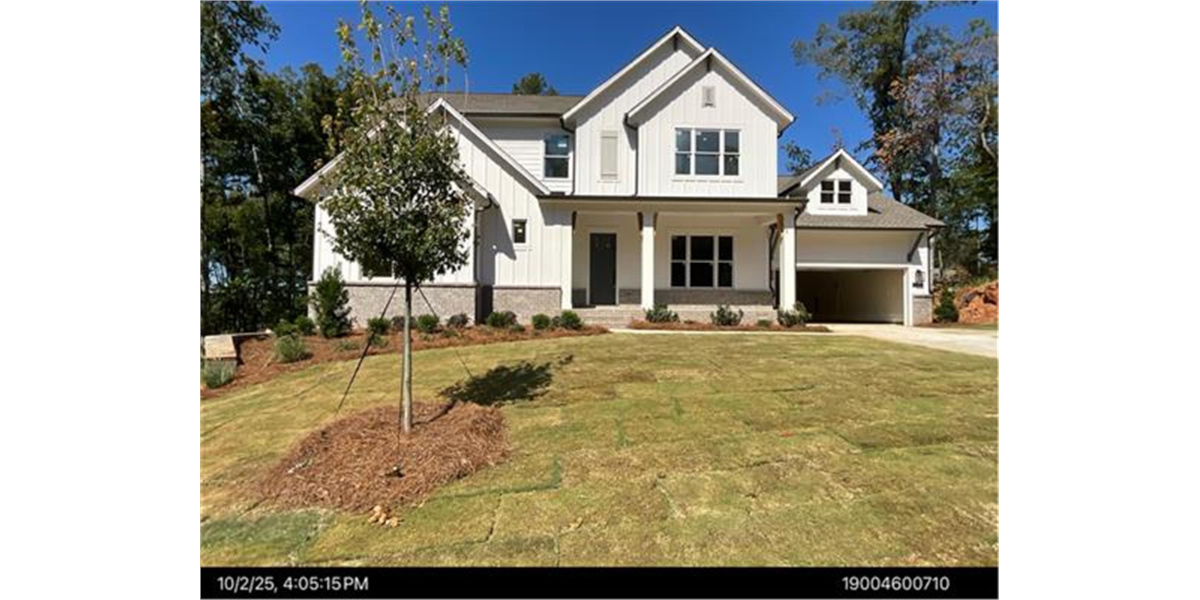
Tips to avoid the ‘naked house’ look when designing for Zone 0


As described by Kristina Hill, research director at UC Berkeley’s Institute of Urban and Regional Development, the “naked house situation” is what occurs after combustible materials within 5 feet of a house are removed to comply with defensible space regulations meant to reduce wildfire risk. Homeowners suddenly discover that their house looks “naked” — without the camellias, roses or rhododendron planted around the foundation.
Read more

As hills residents are told to clear vegetation around their homes to prevent wildfires, they are helping develop a new landscape design paradigm for the era of climate change.
“People may be shocked by that,” Hill said. “People are worried about curb appeal, the view from the street. That’s why it’s so important to draw people’s attention to the garden.”
The notion of wrapping a house with plants, trees and a lawn has been promoted in the U.S. since the middle of the 19th century, but as more fire-resistant homes and gardens promoted by fire departments across California and the insurance industry gain traction, such long-held landscaping practices are about to change.
To come up with new landscape designs in fire-prone regions, Hill recently administered a “wildfire-prepared home” design contest at UC Berkeley intended “to show that beauty and safety can be compatible goals” in an era of climate change and that “the visual draw and practical function of a home can go hand in hand.”
See all the design contest winners
The contest’s winning landscape-design ideas, announced last year, emphasize the 5-foot home ignition buffer zone, the so-called Zone 0. Teams competing in the contest also had to think about how to do “islanding and vegetating” in the next zone from the house, from 5 to 30 feet — where smaller, thinner, lower vegetation is called for — and prevent “ladder fuels,” ground plantings that can reach up to the lower, and then upper, branches of trees when ignited.
Although all eight winning projects have some aspects that might appeal to Berkeley homeowners, Hill pointed to two in particular that had some design ideas worth noticing.
See Diebel and Rashidi’s full proposal
In the project designed by Grace Diebel and Shayda Rashidi, their highest-price design ($64,719) is notable for its use of two “barrier reflective pools” close to the home in both the front and backyards that “not only embrace the openness in the zone,” but provide an additional safety feature for fire protection with the use of water. Other design elements include corrugated aluminum fencing, granite gravel ground cover and a breeze block concrete fence along the front property line with a metal gate.


Since some homeowners in the Berkeley Hills worry that the Zone 0 requirements will give their properties the sparse, gravel-and-cacti look of desert locales in Palm Springs and Phoenix, Arizona, Hill noted how the view from the curb reveals a lush front yard, even if it does utilize gravel and some cacti.
The most affordable ($5,000) version did away with the water features, along with other amenities in the backyard, but keeps the focus on curb appeal. This version also retains the same aluminum fencing, breeze block wall in front and islands of plantings. Granite gravel was switched out for less-pricey pea gravel.
See Curtis, Demosthenes and Raine’s full proposal
A design created by Grayson Curtis, Elias Demosthenes and Harrison Raine, whose “before” images most resemble homes in the Berkeley Hills, with lawns in the front and backyard, shrubs right up against the house, combustible bark mulch and established trees whose branches hang above the roof within Zone 0. Highly flammable hedges run along the borders.

Because “landscaping is expensive,” the team came up with a three-phase plan, beginning with the most immediate fire safety issues that could allow a homeowner to build out the rest of the property over time as budgets allow.

The price tag for all three phases: $41,384. (Costs represent only the materials that were introduced, not the cost of clearing, installation or home hardening.)
The cheapest option ($4,887) includes the installation of gravel and flagstone paths that encircle the house within Zone 0, limbing up trees and reseeding the lawn with low-maintenance native fescue.

In a middle-cost proposal ($9,983), islands of native perennials mixed with the gravel break up the front lawn and the stepstone path continues to the front sidewalk.

The priciest phase ($26,514) includes replacing a front fence with a stacked stone wall, a perennial rock garden, a stone bench off the home’s front entrance and a water feature near the entry path.

Unlike the first project, which utilizes cacti and succulents like agave, this project features more native and leafier plants that create a softer feel.
For Hill, the most encouraging outcome was that the projects were, in effect, an antidote to the “naked house.”
“Students were able to show some convincing drawings that, even if you remove all the vegetation from the Zero 0, your eye can be drawn to the area outside the zone using islands of vegetation that create a screen of lushness from the street.”
Need more ideas? Head to the model garden at North Berkeley’s Fire Station No. 4

Modeled after demonstration gardens at firehouses in Marin County, the Berkeley Fire Department has removed the traditional landscaping at North Berkeley’s Fire Station No. 4 and replaced it with decomposed granite gravel and a wide array of plant materials. Completed in December, the “smart landscape garden” is the first of its kind in Berkeley, intended to showcase what Zone 0 landscaping can look like.
“We wanted to put the garden at Station 4 because it is adjacent to Marin Avenue, which leads to the hills,” said Jesse Figoni, a fire inspector who was in charge of the project. “So it’s very visible for people who live there.”
The previous landscape was covered primarily in English ivy, an old-fashioned groundcover that was brought to North America as early as 1727 and is extremely invasive. The ivy was replaced with sand-colored, decomposed granite gravel along the building and all the way up to the sidewalks. Grey pavers “break up the continuity of fuels and liven up the space,” Figoni said.
The gardens showcase different themes: Mediterranean plantings at the corner of Monterey and Marin avenues; a California native garden on the Marin Avenue side; and a succulent garden on the side of The Alameda.
The next phase will be a kiosk outside the station that describes the plantings and their characteristics.
All renderings are courtesy of the UC Berkeley Department of Landscape Architecture & Environmental Planning.
Related stories

Some Berkeley Hills homeowners push back against mandate to clear plants around their homes

No plants, no wood fences: Berkeley bans anything flammable within 5 feet of many hills homes

City Council gives final approval to ban on vegetation within 5 feet of some Berkeley Hills homes
link