15 smart home devices that are actually worth the money, according to a tech pro
Smart home tech is full of big promises, but a lot of it isn’t actually worth the money. I’ve owned devices that absolutely earned their place in the house — like my smart plugs, garage opener and locks — and others that were fantastic right up until reality hit, like the smart faucet I loved until it stopped working and took the entire kitchen down with it.
Quick Overview
“Smart” doesn’t automatically mean “better.” I’ve watched as a few of my friends and family members wrestled with smart fridges and stoves that needed software resets or numerous service calls, which helped cement my decision to go with similarly priced, higher-end non-smart appliances, which have quietly done their jobs for years without much complaint.
So which ones are worth it? Below are the smart devices that have consistently punched above their price tag — plus a few honorable mentions that can make sense in the right home. They’re the upgrades that have underpromised and overdelivered, saving me time, cutting energy costs and making my home easier to live in without the need for constant maintenance or troubleshooting.
Comfort and automation
These are the smart home upgrades that quietly improve your everyday life — better lighting and routines that run in the background without constant tinkering. When smart tech works, this is the category you notice most because it saves time and eliminates small daily annoyances.

Amazon
These devices learn schedules, optimize heating and cooling throughout your house and reduce energy bills automatically. They can also be controlled through apps, which is nice if you don’t want to get out of bed in the middle of winter to turn up the heat. Additionally, placing nodes throughout the house means you get a more accurate reading of how warm or cold your home is, not just how warm it is at the thermostat.
$260 at Amazon

Amazon
Almost every light bulb in my house has been converted to a smart bulb. I love the ability to turn on and off lights through an app (I use Google Home, but Alexa and Apple Home are also great options) or by telling my smart speaker to turn off all the lights at the end of the day. What used to be a costly upgrade can now be done for much less and the options are endless, from bulbs to recessed lighting that can all be controlled in one Home app, regardless of how many brands you have.
$27 at Amazon
Amazon
Don’t want to deal with replacing a bunch of working recessed lights and fixtures? I don’t blame you. Replacing the switch they’re on is the easier, smarter option — this one upgrade gives you scheduling, dimming and voice control for the entire room without touching a single bulb. It’s lower cost and less hassle than swapping out a dozen individual smart bulbs.
$11 at Amazon

Amazon
Have you ever left the house and wondered whether you unplugged the curling iron or turned off the coffee maker? That’s why I first bought smart plugs, so I could turn off outlets with the tap of an app. Now I use them for Christmas lights around the holidays, the few lamps I own that don’t have smart bulb capabilities and, most importantly, to automatically brew my coffee every morning so I can pour myself a cup as soon as I wake up.
$45 at Amazon
Amazon
Almost every TV I own has one of these plugged in. Fire Sticks turn a regular old dumb screen into a streaming powerhouse and keep all my apps in one place — no fumbling with multiple remotes or inputs. They’re also the easiest way to bring an old TV back to life (looking at you, garage Toshiba).
Pro tip: Bring one with you when you travel and all of your apps and shows will come too.
Related: The best streaming device for 2025 to make the most of your TV viewing experience
$30 at Amazon

Amazon
I don’t need a robot butler (I’ve seen I, Robot too many times for that), just something that can play music, turn on the lights, tell me the weather and set a timer while my hands are covered in pancake batter. The Nest Mini does it all without complaint and occasionally even understands what I said on the first try.
$60 at Amazon
Amazon
I’m one of those people who actually likes vacuuming. It’s mindless and I can easily do it with my AirPods in, blasting music or listening to a podcast. Mopping, on the other hand, is awful. That’s why, if I’m looking for a robot cleaner, I’m going to ask it to do more than just vacuum. I want my floors to be spotless in the mornings, and when I take out the trash, I want my unused mop and bucket to be in it.
Related: The best robot vacuum to keep your house clean in 2025
$280 at Amazon
Safety and security
This is where smart-home tech earns real peace-of-mind points — from knowing who’s at the door to checking that everything is locked up for the night. The best devices here add protection without making your home feel like a surveillance hub.
Amazon
The Ring Cam has turned “Was that a raccoon or the wind?” into the simple check of an app. It’s my always-on security system, package spotter and neighborhood wildlife documentary crew all in one. The motion alerts are instant, the footage is clear and the peace of mind of knowing what’s happening outside, whether I’m home or halfway across the country, is worth every penny.
For additional security, I installed a Ring Floodlight Cam above my garage that connects to the same account and is wired in, so I don’t have to worry about climbing up on a ladder and replacing a battery every month.
Related: Ring Battery Doorbell Pro review: An expensive but effective porch security camera
$50 at Amazon
Amazon
The first thing I did when I got the keys to my house was change the locks. As someone who has four exterior doors, I didn’t want to bother with a key every time I went outside, so I opted for these keyless entry handles instead and they’ve come in handy, especially when neighbors and family needed to get in and we aren’t around. We decided to keep our deadbolts analog, but if you so choose, there are smart options for deadbolts as well.
$239 at Amazon
Amazon
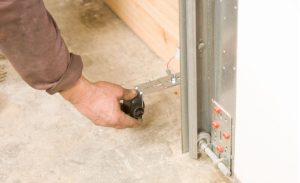
The MyQ is one of those smart-home gadgets that I wish I had bought years ago. I can open or close the garage from anywhere, get notifications if the garage door is left open and even schedule a time in the evening for it to automatically close. It’s simple, reliable and genuinely helpful, no subscription necessary.
$40 at Amazon
Amazon
Traditional smoke and carbon monoxide alarms are great, and I can’t imagine sleeping through one (I’ve set off the smoke alarm in my kitchen more times than I can remember), but having an alert on your phone that can tell you something is wrong even when you’re not home adds another layer of protection.
$71 at Amazon
Amazon
“This is one of those ounce-of-prevention-worth-a-pound-of-cure products,” says Senior Tech Writer Rick Broida, “because if just one of these sensors detects just one leak, it could literally save you thousands of dollars. That’s why I’ve had them deployed around my house for the past several years. And you know what? In that time, they caught two leaks.
“The system consists of a little gateway module that plugs into an AC outlet and three Wi-Fi sensors you can place in key areas: under sinks, near the hot-water heater, behind the washing machine, etc. — anywhere a leak is likely. (There’s also a bundle available that includes five sensors.)
“Each one can detect water dropping onto it from above and water touching it from below. If that happens, it triggers a loud siren and notifies you via e-mail and app alert.”
$36 at Amazon
Cost savings and home infrastructure
Not flashy, but foundational: These devices make everything else work better while quietly reducing waste and energy costs. Strong Wi-Fi, efficient climate control and real usage tracking don’t get the hype, but they’re the upgrades that pay you back month after month.
Amazon
This three-node bundle is nearly identical to the Eero system I installed years ago, and the reason I love is it that you set it and forget it. Or, at least, that’s been my experience; my home is blanketed in strong Wi-Fi signals, to the point where I rarely even open the Eero app. There’s just no need.
While the wireless standard on this kit isn’t the latest and greatest Wi-Fi 7 version, its Wi-Fi 6 speeds will be plenty fast for most real-world applications, including 4K video streaming. It’s a bit pricey, but it offers double the bandwidth of the Eero 6 (non-plus) system.
$195 at Amazon

Amazon
This morning, I got an email from my power company letting me know it’s increasing rates by nearly 10%, as if there’s anything I can do about it. Well, technically, there is. I’ve always liked tracking data — from the albums I’ve listened to this year to how much energy I’m burning at home — and a smart home energy monitor is an easy way to actually see where you can cut back and save some cash as those power bills keep creeping up.
$200 at Amazon
Amazon
It may be winter, but it’s actually a great time to think about installing a smart sprinkler controller. I grew up in Michigan, where water is plentiful, so it wasn’t until I moved to Colorado’s high desert that I ever needed to deal with a sprinkler system. The old-school dial controller isn’t exactly intuitive — and remembering to shut it off when it’s pouring out? That’s something I never manage to do. This one will do that work for you and is compatible with 99% of the sprinkler systems out there as well.
$199 at Amazon
Other smart devices to consider
These live in the “nice to have, but only if you need them” category — genuinely useful if your lifestyle lines up, unnecessary if it doesn’t.
Smart scales
This scale is great for tracking weight trends and syncing with all of my health apps, but the body-fat metrics are notoriously inaccurate compared to DEXA or clinical scans, underestimating my body fat percentage by around 5%.
Smart faucets
Touchless operation and measured pours are legitimately useful in daily kitchen life, but reliability and repair complexity can be deal-breakers when something goes wrong. While it worked, I loved our smart faucet telling Alexa or Google to pour me a cup of water was a neat party trick (filling up a pot was much more useful), but once it stopped working, the hassle of troubleshooting it wasn’t worth it. Instead I ended up installing a less expensive touch-free faucet and haven’t looked back.
Smart calendars
Always-on shared calendars and chore boards can reduce mental clutter for busy households, though phones already cover most scheduling needs for many people. That said, being able to glance at a calendar on the wall rather than open an app is preferred by quite a few people, considering over 60,000 of these have sold in the past month.

Smart air purifiers
As someone who lives in a wildfire-prone region, I have found my air purifier to be a valuable addition to my home (those in high-allergy homes or cities with poor air quality may agree). That said, the ongoing cost of filters limits everyday value, so I tend to only run it when necessary, rather than year-round.

Smart baby monitors
The advanced motion and breathing tracking on these gadgets can offer peace of mind for new parents, though from firsthand experience, I know that false alerts can cause as much stress as reassurance.

If you have Amazon Prime, you’ll get free shipping, of course. Not yet a member? No problem. You can sign up for your free 30-day trial here. (And by the way, those without Prime still get free shipping on orders of $35 or more.
link