


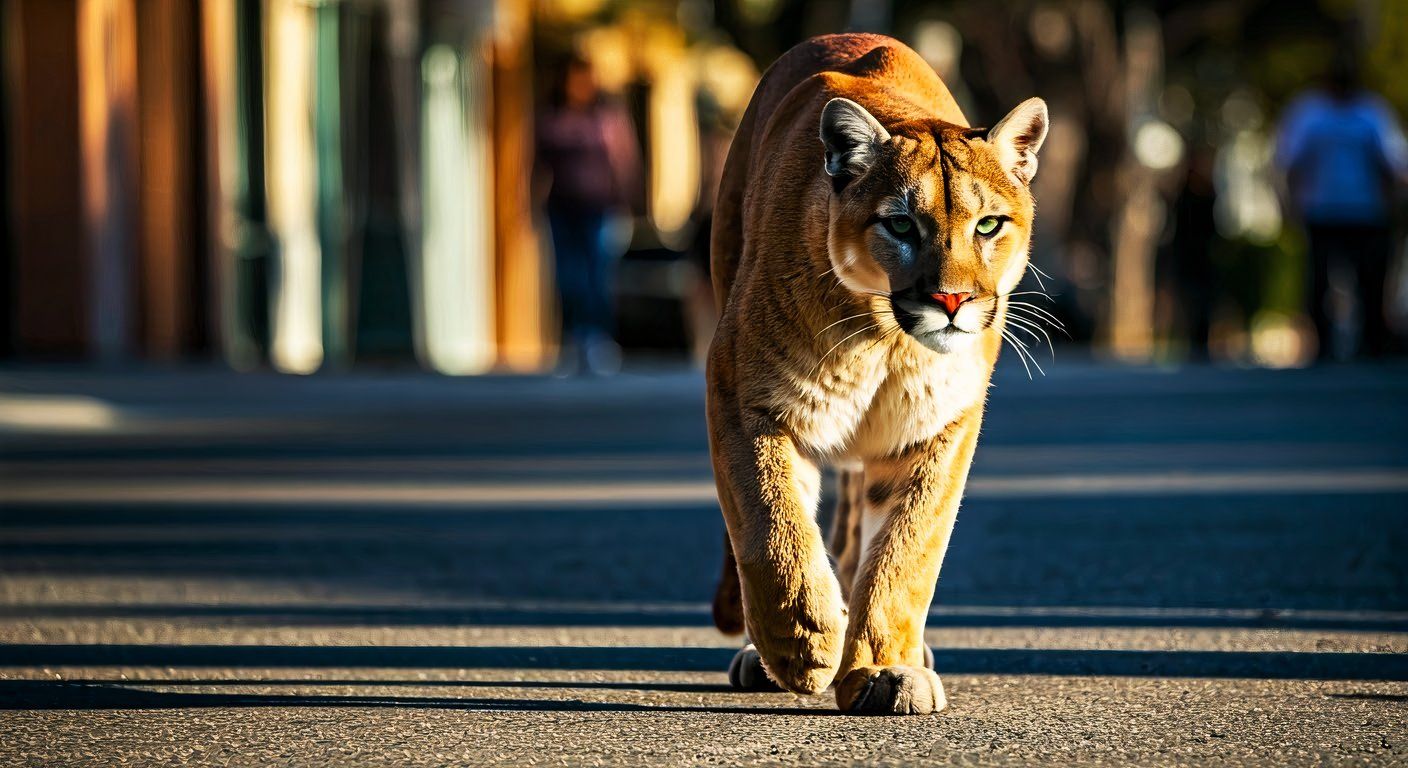
After the devastating Eaton fires, leaving behind a disastrous scene, there’s a positive light at the end of the tunnel, showing just how strong nature can be.
Caught on camera, wildlife started to return after the impact of the Eaton Fire, to the area. Animals, large and small, have begun returning to the area labeled as the burn zone within the Hillside.

Related
When A Lioness Helped A Tiger Mother Raise Her Cub
Materal instinct is so strong it breaches the boundary of even species.
Animals Return To Start Over
From the tiniest creatures, to powerful mountain lions, wildlife is coming back to the Hillside after the devastation hit.

“Immediately, we had coyotes and then within a few weeks, we had the other animals that you’ve seen on the trail cams. Bobcats and owls… deer. And then we got the mountain lion,”
Stated Kristen Ochoa, the founder of the Chaney Trail Corridor Project.
Wildlife returning to the scene is an incredible indicator that the ecosystem is improving, going back to its original state. With the camera set up to capture what wildlife returns on the Chaney Trail Corridor in the San Gabriel Mountains, professionals have a chance to study the overall impact and healing that takes place, giving UCLA research teams a glimpse into how the aftermath of the fire unfolds.
“We are seeing the regrowth of a lot of the trees, the elderberries, the San Gabriel Oaks… we’ve got some beautiful fire-following flowers that have just come up. So we’re hopeful,” Ochoa explained.

Related
Mountain Lions In This California City Are Becoming Nocturnal For A Very Unsurprising Reason
Mountain lions have chosen to become nocturnal to stay as far away from humans as possible.
Tracking The Road To Recovery
Plans are in place like The Chaney Trail Corridor Project, originally started to keep tabs on a wide range of property with frequent animal crossings in the San Gabriel Mountains, and even some urban areas. When the fire spread back in January, it ultimately ruined all the trail cameras that had been put in place. As part of the recovery mission, new cameras have been put in place and are tracking important wildlife behavior.
“We don’t know a lot about how bat communities form in this short time scale of just a couple months to a year after a wildfire,”
UCLA and Chaney Trial Corridor Project biologist, Joey Curti, stated. “About 17 species of the 25 that occur in the state of California occur here in Southern California, which is about half of the diversity of the whole United States.” Factoring in animals, like bobcats and coyotes, the city being much calmer than normal seems to be having an effect on the surrounding wildlife.
“They clearly feel peaceful and relaxed, and I think this is an important time for them to have some sanctuary,” she said.
link