


Diane Sylvester | for E&P Magazine
“It was the beginning of a new reality,” said Michelle Zenarosa.
On June 6, 2025, what began as a routine team-building lunch became a turning point for Los Angeles Public Press — and soon for journalists and communities across the country.
Mid-meal, reporters’ phones lit up with alerts: Immigration and Customs Enforcement was active nearby in the garment district. “We’re like, ‘Oh, they took a bunch of people in the garment district. We should keep an eye on that. What’s going on? That’s a lot,’” Zenarosa recalled. One reporter said, “I’m going to go down there.” Within minutes, the 14-person nonprofit newsroom mobilized.
“And then it just snowballed,” Zenarosa said. In the days and weeks that followed, as the outlet’s editor-in-chief, she faced an unprecedented challenge: how to protect her team as they covered increasingly violent enforcement actions by ICE and other federal authorities across Los Angeles. “We were not prepared at all for the level of what came down after that, the sort of blowback on journalists, as well.”


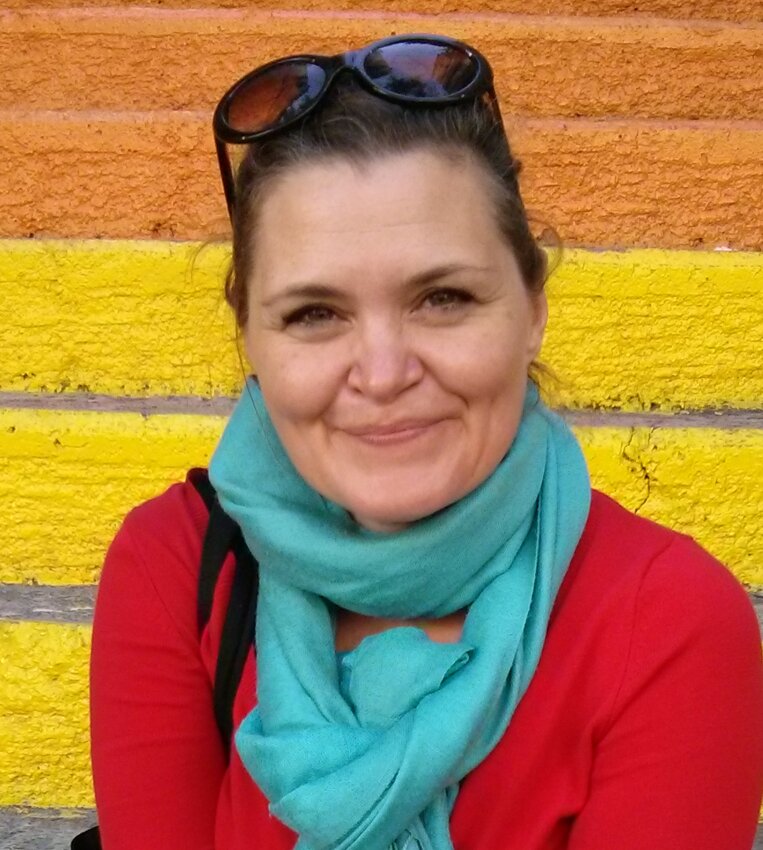
Michelle Zenarosa, editor-in-chief, LA Public Press
That first month, the staff didn’t take a single day off — not because Zenarosa asked them not to, but because “people wouldn’t let me even bring that up.” For a newsroom filled with people from the communities being targeted, the attacks hit especially hard. “When you know those communities are attacked, it does hurt more in certain ways,” she said.
The newsroom focused on their community’s needs, creating guides on how to stay safe during ICE enforcement actions and when talking to the media.
By November, Zenarosa had distilled the crisis into a single, stark headline: “When your local reporter needs the same protection as a war correspondent.” The article details the challenges she and her team faced and the actions they took to support not just their newsroom but others, as well.
Building safety networks from the ground up
Like most local newsrooms across the U.S., LA Public Press — then nearly three years old — had no hostile-environment protocols in place. The gap became painfully clear as violence against journalists escalated. Two of Zenarosa’s freelancers were hit by rubber bullets while reporting; one was struck in the face.
Other incidents were more unsettling. A reporter photographed a federal agent taking a picture of their face. “Why are [they] doing that? So that’s scary,” Zenarosa said. “I don’t know. I did not know what to do with that.”
Another reporter reached out to her, saying ICE had followed their mother — a nurse and immigrant — from her job, trailed her close to her house, and stopped her at a gas station for questioning. “There’s not a playbook that says this is what you should do in that situation. There’s not in an HR playbook. There’s not a journalism playbook of what to do in an authoritarian situation when you know your staff is getting attacked,” said Zenarosa, explaining the complexity of challenges they’ve had to navigate.
Zenarosa knew she couldn’t solve this alone.
She reached out to colleagues in Los Angeles and the region, finding peers navigating similar challenges, and began exploring how to share resources and build training opportunities for their staff and freelancers in the market.
In early June, Zenarosa reached out to the International Women’s Media Foundation (IWMF), which had been providing free support for digital safety efforts. She arranged for them to do a training and opened it up to other newsrooms and freelancers. Some 70 people attended. The group learned about techniques for creating buddy systems in the field, personal protective equipment (PPE), setting up check-in protocols and legal basics.
The sessions Zenarosa organized revealed sobering truths. “We learned a lot just from being in the same room with people about how unprepared everyone is,” Zenarosa said. Journalists came from organizations of all sizes — from well-funded public media outlets to two-person newsrooms in the Inland Empire. One older reporter was surprised when IWMF trainers suggested finding community with other journalists in the field. “She said, ‘We don’t do that. I’ve never done that in my 30 years of reporting,’” Zenarosa recalled.
In November, Zenarosa and a Caló News reporter organized a full-day convening that brought together 60 journalists across the LA region. The gathering focused not just on press freedom, but on editorial mapping — identifying each outlet’s strengths, the communities they cover and the gaps nobody is covering. “There were people crying at the end,” Zenarosa said. “Just to have us all together was really special. That never happens.”
But sustaining this work has proven costly. Coordinating with other outlets, securing safety gear, organizing trainings, maintaining check-in systems — all of it adds to the burden of an already stretched newsroom. Zenarosa had hired a freelance editor, Rina Palta, to help coordinate their reporting efforts and the regional training sessions.
“If I had a magic wand, there would be a team — a real team around sustaining this. That would be great, and also more funding for us to sustain this, because it’s also tough on our end to build this and keep it going,” Zenarosa said.
Extending the support across the country
What happened in Los Angeles was not isolated. Across the U.S., reporters covering federal enforcement actions faced violence and arrest in 2025, with patterns that alarmed press freedom advocates.
As of mid-December, the U.S. Press Freedom Tracker issued its annual review, showing at least 32 detentions or arrests of journalists across the country that all occurred while they were reporting on immigration actions, with 90% occurring at demonstrations. Most detained journalists were released without charges or had them quickly dropped. Advocates and journalists say the harm of detention extends beyond the time spent in custody, increasing fears of reporting in these environments and curtailing freelancers’ ability to be on assignment and earn money.
The Tracker also documented that journalists nationwide faced repeated instances of authorities using tear gas, pepper balls and other less-lethal projectiles that directly harmed journalists in the field. According to the report, attacks on the press in the U.S. in 2025 totaled more than the combined total for the three previous years.
Half of those arrested were assaulted by officers in the lead-up to or during detention, with journalists treated as potential participants or “agitators” rather than observers.
By late summer, word had gone out that the Trump administration was planning something they dubbed “Midway Blitz” — the intensive targeting of immigrant communities by ICE agents and other national forces would now move its center stage to Chicago.
Zenarosa reached out to colleagues in Chicago to share any insights they’d gained and to offer a working document she’d created with guidelines for reporters who don’t regularly cover immigration. “We were sort of like Sister Cities, one of our reporters is from Chicago, so he was very invested in both cities. … I know they were very thankful to us for downloading them on things to watch out for and be prepared for,” she said.
International safety experts say this kind of regional sharing is a key way for newsrooms to create a more resilient support system. Lucy Westcott, chief emergencies officer at the Committee to Protect Journalists, told E&P that the size of the United States makes it more challenging to build one-stop training opportunities, but she said newsrooms can help share information and build capacity.
“Journalist safety in the U.S. has become much more precarious. The state of the news industry means that safety conversations around PPE, the cost of it can often be pushed to the side because more pressing issues like how do I keep my newsroom going and how do I deliver news to my community in a timely way?” said Westcott.


She underscored the importance of risk assessment, noting that even a five-minute conversation with an editor about hazards before an assignment can make a crucial difference. “While journalists are still protected by the First Amendment … we are seeing many examples of rights not necessarily being respected,” Westcott said.
So far in 2025, CPJ has trained more than 700 journalists on their physical and digital safety — a staggeringly high number for the United States. The organization intends to continue that high level of training because the need remains urgent.


To help bridge gaps, CPJ joined with partner organizations such as IWMF, PEN America, Reporters Committee for Freedom of the Press (RCFP) and Freedom of the Press Foundation (FPF) to form the Journalism Assistance Network (JAN) — a coordination hub designed to streamline training, safety resources, legal help and emergency support resources for journalists across the country. Newsrooms and journalists can find emergency hotlines for legal and safety support.
Elisa Lees Munoz, executive director of IWMF, emphasized that much of this support is available at no cost, particularly for small and independent newsrooms that lack security infrastructure. “There are many resources out there that are really overwhelming for somebody just sitting down to start a plan, but they are out there — for free,” Munoz said. She stressed that free safety trainings, digital security sessions and risk assessment tools exist precisely to help newsrooms that cannot afford dedicated safety staff.


Nate Gowdy’s wrists after he was released from excessively tight and painful zip-tie restraints. Gowdy and other journalists were detained by Los Angeles Police Department officers while covering a protest in Los Angeles on Aug. 8, 2025. (Photo credit: J. W. Hendricks)
IWMF has also launched a Safety Ambassadors Program — a training initiative designed to develop skilled individuals who can provide safety resources and support within their local communities. “Most of those applications, surprising to us, have come from newsroom leaders and editors, which is great because that’s where the culture change is really going to happen,” Munoz said.
As Westcott emphasizes, “If there’s one thing to take away from this, anytime you go out, please do a risk assessment, even if it’s just a five-minute chat with your editor.”
These resources collectively provide a foundation for newsrooms — large and small — to build safety protocols without bearing the full cost alone.
Yet the scale of the challenge is daunting. “I think one of the issues that we sometimes run into in the U.S. is that we sometimes forget how big this country is, and having one group to manage the whole nation is difficult,” Westcott said. “I mean, California might as well be an entire country by itself. There are tactics that police forces use in New York that differ very much from the experience that journalists have in New Orleans, for example.”
Tailored local training and supporting responsible coverage to build trust
While national resources help set standards, training must be tailored to specific newsroom needs and local realities.


Alejandro Cancino, senior investigative reporter, Injustice Watch
In Chicago, Senior Investigative Reporter Alejandra Cancino emphasized that effective safety training begins with listening to journalists. The city has a history of collaborative training, with journalists coming together for years to improve reporting across the region.
When immigration enforcement came to Chicago, this collaborative culture helped reporters organize quickly. Cancino has advocated for training that reflects the specific risks journalists face in their local environment.
Training, she said, should not be generic, but responsive to the people it is meant to serve, including freelancers who often shoulder frontline reporting without institutional support. “I think the community that is still underrepresented in training is the freelance community,” she said. “In times of need, historically, newspapers have relied on freelancers to cover the need.”
Beyond risk assessment and PPE, newsrooms are exploring new ways to report breaking news events to ensure that coverage itself does not contribute to fear or misinformation and instead builds trust.
The time to prepare is now


Freelance Photojournalist Matthew Kaplan (at center left in green) was the first journalist known to be arrested in 2025. He was detained covering an anti-deportation protest in Gary, Indiana, on Jan. 18, 2025. (Photo credit: Lisa Kiselevich)
Westcott reinforced this outlook, saying that cross-newsroom communication — including talking to outlets covering similar enforcement patterns — is a key way to stay safe because “there’s a lot that we don’t know about these activities; they are unprecedented at this scale.”
Munoz emphasized the changing reality journalists face. “The situation is kinetic, and it is changing every day,” she said. Safety risks vary dramatically based on identity, and every safety plan should account for that reality. “It matters who you are, and there are extremely different levels of risk based on your identity.”


Steve Held, a journalist with Unraveled Press (at center), was reporting on an anti-deportation protest in Broadview, Illinois, when federal agents arrested him on Sept. 27, 2025. (Photo credit: Humanizing Through Story/Jon Stegenga)
For Zenarosa, the challenge is acute. LA Public Press’s audience more than doubled this year, with web traffic increasing by over 2,000% during peak coverage periods. Yet funding hasn’t grown. “Right now, as it is, we’re not sure that we’re financially sustainable in the long term,” she said. The newsroom is trying to survive while also responding to ongoing enforcement operations that remain high even if they’ve become normalized in public perception.
Her advice to other newsroom leaders: “Really hone in on your lane and your vision, who we are, what we do, what we’re covering, because we were pulled in 1,000 different directions.” Build in care for staff — mandatory time off, regular check-ins about whether a story is too heavy. “Just having that sort of care built in goes a long way.”
As newsrooms navigate this environment, the consensus is clear: preparation must come before the next operation.
“No organization wants to be thinking about this when they’re in the midst of an emergency,” Munoz said. “And so the time is now, because that emergency is going to happen.”

link